Donate for my blog

Donate

Tehelka revelations shocking: Sri Sri

⊆ 3:48 AM by Gaurav Shukla | , . | ˜ 0 comments »

Art of Living guru Sri Sri Ravi Shankar Tuesday described the Tehelka expose on the 2002 communal carnage in Gujarat as shocking and said that the terrible violence was contrary to Hindu religious ethos.

"If what they have revealed is true, it is extremely shocking because Hindus are not known for such acts. It is not in the character of Hindu society to kill and burn others," the spiritual guru told reporters during his visit to Maharashtra's Vidarbha district, an area affected by a large number of suicides by distressed farmers.

"I congratulate the reporter (of Tehelka magazine) who has done this (the sting operation in which the perpetrators of the violence have been caught on camera admitting to the killings) and would like him to undertake similar operations on the anti-Sikh riots (of 1984) and Naxalite violence in the country," Sri Sri said.

Describing the Maoist violence in Chhattisgarh, Andhra Pradesh and Maharashtra as the biggest threat to the country's internal security, Sri Sri urged the media to address the serious problem.

"I would appeal to the media to insist on the introduction of moral and spiritual instruction in the school curriculum as that would ennoble the young, impressionable minds," he said, attributing violent tendencies to the disappearance of spiritual content from instruction at homes and schools.

"This is particularly true of the Hindu society today, which is why you will generally find Hindu youths among Naxal cadres," Sri Sri said, pointing to the presence of Maoist rebels in Nepal but their absence in Bangladesh.

Indo-Asian News Service


STING OPERATIONS

⊆ 12:42 AM by Gaurav Shukla | , . | ˜ 0 comments »

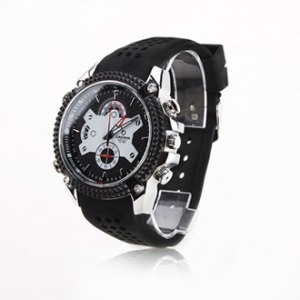
The advent of miniaturised audio and video technology, specially the pin-hole camera technology, enables one to clandestinely make a video/audio recording of a conversation and actions of individuals. Such equipment, costing between US $ 500 and 5,000 plus depending on quality, generally has four components-- the miniaturised camera, often of a size of a 25 naye paise coin or even smaller (pin top size), a miniature video recording device, a cord to transmit the signals and a battery cell. The use of the cord can be avoided through wireless transmissions.
There are various ways of hiding the camera---inside a briefcase, or a pager or a cigarette lighter or a cellular telephone or a fountain pen or a smoke detector or in the nose frame of sunglasses or other spectacles etc.
Where a briefcase is used, the recording equipment, the transmitting cord and the battery can also be concealed in it. In other cases, the remaining components are generally attached to the body of the user. In the sunglass/spectacles version, the connecting cord looks like the safety cord which some people use with their glasses. In other cases, an observant person can notice the telltale connecting cord. Most of these gadgets have either a self-activation mechanism or a mechanism which has to be activated manually. The briefcase camera gets activated when the briefcase is kept in a particular position.
The visuals of Shri Bangaru Laxman recorded by Tehelka.com indicate that the camera was probably at a level higher than the waist of the journalist. The use of a briefcase, which would normally have been kept on the floor, seems unlikely. It was probably concealed in some other object of day-to-day use which he kept on the table without the connecting cord attracting the suspicion of Shri Laxman or, most probably, in the sunglasses/spectacles worn by the journalist in which case the cord would not have attracted suspicion.
In Western democracies, there are no curbs on the sale or purchase of hidden recording equipment and using them in one's own house or office, but, in many countries, it is illegal to use them clandestinely against another person in his or her house or office. Watergate is a famous example of a President leaving office in disgrace and his lieutenants being jailed for trying to have a recording equipment clandestinely fixed inside the office of a political adversary.
The only exceptions to this in the US are the law enforcement agencies and police-licensed private detectives, who are allowed to use them under certain circumstances under carefully-controlled conditions. Licensed private detectives can use them for the collection of evidence, but not in a sting operation. Only the FBI can mount a sting operation. No private individual, not even a journalist, can.
Reputed companies manufacturing and selling clandestine, miniature cameras generally carry the following warning in their advertisements: "Individuals, any and all entities must and shall comply with all applicable local, state, federal laws and regulations before performing or engaging in any recording, covert surveillance or any transmission of radio frequencies. Some products require licensing prior to using these items. We will mark these items and will require your understanding prior to purchase. We shall NOT be held responsible for users' criminal or civil misuse. Be informed of the law, and it's your responsibility. A lot of these products have covert purposes. You need to be careful and aware of how you can use these items. It is your responsibility to know how and when you can use the items you want. Visit or contact your local government entity for laws and regulations on uses. It's your responsibility to be aware before you buy. Refunds will not be given due to lack of knowledge of local, state, and federal laws, or licensing requirements. Be aware of your local laws prior to using ANY covert devices."
If Tehelka.com had done in the US what it had done in India, its owners and their journalists would, most probably, have been liable for arrest and prosecution and for damage suits from those interviewed for damaging their reputation through covert means, but in India there are no laws regulating the use of covert investigative/surveillance equipment by private individuals.
Despite the legal safeguards in the US, there have been growing complaints of the misuse of such covert equipment not only by private individuals, but also by the law enforcement agencies, resulting in a violation or distortion of the rules of natural justice and particularly of the basic constitutional or legal guarantee that no person can be made to incriminate himself by using force or deceitful means.
The Washington-based Privacy International, a non-governmental organisation, has since 1990 been drawing attention to the dangers of an uncontrolled use of clandestine video and audio equipment and closed circuit TV. It says: "In a very short time, the systems have challenged some fundamental tenets of justice, and created the threat of a surveillance society. Other more traditional approaches to law enforcement and social justice are being undermined without due process. Privacy International believes the government should immediately appoint a watchdog to investigate the industry and to recommend appropriate legislation."
The FBI conducts every year about 175 sting operations to investigate complaints of bribery, extortions, narcotics smuggling, sale of cigarettes to minors, child sex etc. In two famous sting operations of 1992, involving the use of hidden cameras, it arrested 18 public servants of Chicago and a member of Mr.Bill Clinton's election campaign team in Indiana on charges of bribery.
Strict ground rules for such sting operations have been laid down over the years by departmental instructions and rulings of the judiciary. Amongst such ground rules are:
* Sting operations could be mounted only against persons against whom some evidence of criminality already exists and a sting operation is considered necessary for getting conclusive evidence.
* Permission for sting operations must be obtained from appropriate courts or the Attorney-General. This safeguard has been laid down since those who mount a sting operation themselves commit the offences of impersonation, criminal trespass under false pretences and making a person commit an offence.
* There must be a concurrent record in writing of the various stages of the sting operation.
* While the transcript of the recordings can be edited, the films and the tapes themselves should not be edited. Where there is evidence of editing, there is an automatic presumption that the recording is probably not authentic.
In the JACOBSON vs. U.S. case of 1992 relating to child sex, the US Supreme Court cited the following guidelines of the US Attorney General on FBI sting operations issued on Dec 31, 1980: "...an inducement to commit a crime should not be offered unless: There is a reasonable indication, based on information developed through informants or other means, that the subject is engaging, has engaged, or is likely to engage in illegal activity of a similar type, or the opportunity for illegal activity has been structured so that there is reason for believing that the persons drawn to the opportunity, or brought to it, are predisposed to engage in the contemplated illegal activity. "
In many judgements, the US Supreme Court has condemned some FBI sting operations for taking advantage of the naivety, carelessness and negligence of the possibly innocent in order to make them appear as possibly guilty.
The Supreme Court has ruled: " The first duties of the officers of the law are to prevent, not to punish crime. It is not their duty to incite to and create crime for the sole purpose of prosecuting and punishing it. Such a gross abuse of authority given for the purpose of detecting and punishing crime, and not for the making of criminals, deserves the severest condemnation... While there are those who do harbor an actual criminal predisposition, the reality is that the majority do not fit this description. These sting operations are constructed so as to take advantage of the fact that everyone makes mistakes. They refuse to discriminate between the "unwary innocent" who are legitimate victims of human nature, predisposed to eventually making a mistake and nothing more, and the "unwary guilty" who are looking for the opportunity to commit the crime, or the "unwary negligent" who just don't care enough one way or the other."
There have been complaints from US human rights organisations that a number of F.B.I. sting operations have caused serious harm to innocent citizens who were the accidental victims of the make-believe criminal organizations set up by the bureau. They have pointed out that an even bigger risk, associated with sting operations aimed at public corruption, is the destruction of the public's confidence in government institutions. This concern was the central focus of a 1984 report by the House Judiciary Subcommittee on Civil and Constitutional Rights after a four-year investigation of stings. "While investigations of public corruption may be intended to restore the public's faith in the integrity of the affected institutions," the subcommittee's report said, "ill-conceived and poorly managed undercover operations are likely to have precisely the opposite effect."
Against this background, certain disturbing questions arise with regard to the tapes of Tehelka.com:
* Was there a metal detector in any of the places visited by the journalists? If so, how was it they didn't sound the alarm on detecting the batteries and the transmission cord?
* Was the activation mechanism automatic or manual? If manual, it must have been activated before the journalists entered the presence of those interviewed and the equipment must have video-recorded their conversations with others too such as the security guards, the personal assistants etc. Where are those recordings?
* Was there an editing of the recordings? If so, to what extent and for what purpose? That there has probably been considerable editing is apparent to even a lay observer. Modern cameras automatically record the dates on which the shots were taken. The dates seem to have been edited. Why?
* Is there a concurrent written record of the various stages of the sting operation from which one could see how many times a person was interviewed and what subjects figured during each conversation?
* Has there been a morphing, interposing, substitution etc of the images/conversations and were these done manually or were they computer-generated?
Through computer-generation techniques one could create a make-believe picture of something, which is far from what actually happened. It is said that in the spectacular scenes of the film "Gladiator", only 30 per cent of the shots were actually taken with a camera; the rest were computer-generated. It is possible for a person to confine the secretly-recorded discussions in one session only to individuals without reference to defence contracts and to confine the discussions in another session only to defence contracts without reference to those individuals and morphe the two in order to create an impression that the names of the individuals figured in connection with the defence contracts.
The possible dangers to national security from alleged attempts of foreign intelligence agencies to use such covert and computer-generation techniques to destroy public confidence in their political leadership and administration had figured in past testimonies and statements of officers of foreign intelligence communities. Writing in the "Foreign Policy" (Fall 1997), John Deutch, Director of the CIA during Clinton’s first term, referred to the dangers of morphed images and messages being introduced into a country's radio and TV systems, spreading lies and inciting people to violence.
Keeping these in view, the first step in the investigation should be for the Central Vigilance Commissioner to ask Tehelka.com to submit all its films and tapes unedited along with the camera with which they were recorded. He should refer them to a foreign expert on the examination of purported covert recordings for expert opinion on the following questions:
* Were the recordings done with the equipment produced by the company?
* If so, is there any evidence of editing, interposing, morphing etc and of the use of computer-generation techniques?
If the expert opinion confirms the authenticity of the recordings, stern action must be taken against those figuring in the recordings. At present, because of the admissions of Shri Bangaru Laxman and Ms.Jaya Jaitly, there is a strong presumption in favour of the authenticity of the recordings. Despite this, the entire recordings must be subjected to technical examination by experts as is normally done in other democracies.
--- B.Raman


Who were behind Tehelka?

⊆ 12:34 AM by Gaurav Shukla | , . | ˜ 0 comments »

- Let the creaters of Tehelka speak themselves about their sting operation and the authenticity of sting operations in India...

In 2000 when we started Tehelka we didn't want any heavy lumber in the newsroom. It was easy doing that because we controlled the purse strings and we could plot and re-plot various editorial machinations without the breath of an accountant or a superior editorial being washing over us.
It was an unaccustomed space for myself particularly. Capital, imagination, time, and the green signal all fusing together at my desk providing me with the right fuel mix to plan and execute, first, the cricket match fixing story and, later, Operation Westend. The opportunity was there just for ourselves and we used it to drive a huge, precariously balanced gig into the nation's eye.
There was shock and surprise, admiration, and criticism. For 24 to 48 hours the top dog of those times (the BJP) was all drugged and stunned, and Parliament went into a spin for many days. In subsequent days and months we received in numerous ways the gratitude of a nation whose many children felt that we had gone and empowered them in no small measure. They saw us as speaking truth to the big and powerful.
These truths that were for long public knowledge but hadn't bubbled up ever in grand technicolor splendour to embarrass the Goliaths of the day. Of course, the Goliaths too had their days but, strangely, though the most sinister of motives were ascribed to Operation Westend no one really got up to advance any bogus theory that the operation, if taken to be done in good faith, wasn't in the larger public interest - that compulsory shield that would justify using intrusive technology like hidden cameras and going undercover with elaborate deception and pretence.
While sting operations have gone mainstream since 2001 - some with decent success like the recent Ghoos Mahal episode in Aajtak and the ones that Tehelka has continued to mount for its paper - India TV's recent "casting couch" series has to be looked upon with consternation.
For me it raises four primary fears. One, a descent into voyeurism of the UK tabloid kind where even the sexual antics of minor royalty is pursued with unfathomable gusto. If public interest starts getting interpreted as the right to know who perhaps, has slept, or is sleeping, or wants to sleep with who it's untenable. Eventually, it would go to the courts and I can't see the lordships taking anything but a dim view on the episode.
Secondly, it gives the Government an excuse to step in and frame some guidelines via a body like the broadcast authority, which they are planning to set up. That would be disastrous. My strong opinion is that the area is best left unregulated relying instead on the wisdom and instincts of the editors of individual media platforms themselves like it is now. But for that to continue to happen editors have to get a good safety net going.
Thirdly, it dilutes the ability of many journalists to pursue serious stories using hidden camera gear where public interest is unquestionable for it colours even serious pursuants of the art with a strong dose of frivolity.
Fourth, and for me perhaps most alarming, it would necessarily lead to a dilution of the ambition and thirst of young journalists to get the big story. If, Shakti Kapoor and Aman Verma are going to be way to "glory" (even transient) for a journalist I might as well exit my profession. No use even dumping my dreams with the current set.
And mind you I am the last person to take any high moral ground on anything. I am even open to the idea of a story on sexual exploitation (which lies at the heart of India TV's attempt) of women by the high and mighty but with a subject as loaded as that there has to be a high degree of finesse and accountability and previous knowledge of the subject's criminality in the area. And I am still not sure how you would balance for the fact that in the Indian social milieu it's the guy that generally makes the move and a girl chatting up would throw different connotations and assumptions in the air that you would have to account for.
If there is a dearth of ideas let me suggest some for India TV even at the risk of alerting potential subjects. I think, coming from the chatter that I hear, an undercover investigation into how questions really get asked in Parliament would yield rich dividends. It would be reminiscent of the mid-90s The Sunday Times "Commons-cash-for-questions" sting in the UK.
If it were upto me I would float a dummy company and approach MPs across party lines requesting them to ask questions regarding purported and maybe non-existent business rivals and get it all on tape. Apart from the seriousness of the matter it would even generate a lot of humour. Imagine the comic spectacle of an MP asking something like, "Why was Gorilla International Pvt Ltd black listed by the Railway Ministry in spite of having bid the lowest for Tsu-tsu diesel engines?"
By the time the Railway Ministry went out of whack figuring out the truth from its files you could perhaps get in ten more questions. I was alarmed when somebody told me recently that the going rate could be as low as Rs 5,000 for some MPs for asking questions. Now, I would have real fun with something like that and only a moron would call it not in the public interest.
You could even have a go at how MPs spend their constituency funds. That's a lot of money and a lot of ground to cover and I would be surprised if it didn't yield a lot of lather.
If that's too hard to do or risky, seeing that politicians are involved (there are just a few lovable mad caps around like Tehelka and the Indian Express) how about a story on the non-performing assets in the Indian banking sector running into thousands of crore? A lot of grease money is floating around there. Or even one on says the grants to different NGOs from bodies like CAPART. If you went around with cameras trying to even locate those NGOs I promise it will be a lot of fun and games.
Of course, if these ideas were considered pedestrian how about wiring up a peon in the Reliance boardroom while the RIL board was meeting to get you a live feed straight from India's premier corporate family (apologies to Mukesh Ambani)? What would really interest me there is the way the so-called independent directors conduct themselves. Are they lazy dogs or are they guarding the public investment?
My LIC policy will mature in many years time and a lot of India Inc money is there in that company and the amount of bonus I will get is going to be determined by how LIC investments fare. Needless to say, the real fun would begin there after the telecast and India TV would learn fast the difference between Mukesh Ambani coming after them and Shakti Kapoor.
I personally prefer worthy opponents. But what else would you expect of a deranged Allahabadi.

----by Aniruddha Bahal


INDIA: 'Sting ops part of journalism'

⊆ 8:45 PM by Gaurav Shukla | , , . | ˜ 0 comments »

In the backdrop of criticism against the television sting expose on a Delhi school teacher, who was allegedly pushing her students into prostitution, broadcasters have defended the sting operation describing it as an extension of investigative journalism and an expose of a terrible crime.
The broadcasters rejected the suggestion, as made by some, that the I&B ministry's proposed content code for broadcasters would have prevented mob violence.
"Would you want such a wolf of a teacher to continue doing what she was doing?" asked a broadcaster. "Shouldn't she be exposed? All the wrong reasons are being cited to justify the content code."
Aaj Tak executive director and CEO G Krishnan said, "TV channels have a right to conduct sting operations, just as newspapers do investigative reporting. It will be incorrect for the government to be given the authority to impose restrictions."
On the mob reaction, Krishnan said, "People have the right to express their views. Unfortunately people reacted very emotionally to the sting, they should have gone to the police or the courts. But a few days back when a girl went to report her stolen mobile to the police she was raped. We don't know how many such cases are taking place. The media is only putting it in front of the people."
Defending the sting conducted by his channel, Sudhir Choudhary from Live India said, "Our sting on human trafficking was in public interest. It was not TRP oriented or we could have carried sleaze, a bedroom story about politicians, if we wanted to garner higher TRPs. And as a news channel we get 20 sting operations. We reject most of them. We only accept those that are in public interest."
He added that the channel had taken the precaution of informing the police about the sting before it was aired. "It is the police's job to maintain law and order. They did not take us seriously and sent only 4-5 constables. In fact, later when a large crowd had collected, the police asked us to stop live broadcast of the mob fury. We immediately removed our reporter and OB van."
Choudhary added that the channel had by evening submitted all the tapes to the police and the education department. On bringing about a content code, Choudhary said, "There is no need for a government controlled content code. I feel that all channel heads are capable of self-regulation. There will be no meaning of a free media in this country, if there is a code."
Times Now CEO Sunil Lulla agreed: "I feel each channel has its own guidelines and mode of sensibility. To say that an umbrella code should be established is declaring a police state. Channels don't air sting operations to instigate violence. To link it to a reaction in this extreme case would be wrong."
Amitabh Thakur, DIG editor, who has conducted stings like Chakravuyh where MPs were caught accepting commissions for releasing MPLAD fund, is of the opinion that stings are investigative journalism. "If editors can take a call on other stories, why not sting operations? Not just a sting but any story should be done with journalistic intentions. The reaction to any story is not the media's responsibility."
While agreeing that sting operations were necessary in certain circumstances Rajdeep Sardesai, CNN-IBN editor-in-chief said, "Any sting operation must squarely be in public interest and not entrapment. I don't know enough about this case to comment on whether it was in public interest or not. But having said that, it is wrong to say that the mob fury could have been incited only by media coverage. There could be numerous factors for what happened on Thursday and media coverage was one of them. However, I do feel that there is need for various filters to be gone through before a sting is aired."


Live India aka Janmat Sting Operation: The Unfortunate rather a criminal attempt on one's innocence

⊆ 8:30 PM by Gaurav Shukla | , , , , . | ˜ 0 comments »

What is Live India (Janmat)

Live India is an Indian Hindi TV channel owned by Broadcast Initiatives Ltd., focusing on news and commentary. It was earlier known as Janmat, when it was focused on "views"; now the channel is sometimes called Live India (Janmat).
In a Rs. 400 million upgrade in August 2007, it opened news bureaus at Srinagar, Chandigarh, Bhopal, Ahmedabad, Hyderabad, Bangalore, Chennai, Bhubaneswar, Kolkata and Guwahati as well as its earlier offices at Mumbai and Delhi.
Sudhir Chaudhary is the CEO of Live India.

Schoolteacher sending girl students into prostitution expose

On August 28 2007, the channel aired a sting operation covering a porn racket run by a schoolteacher in Delhi involving school girls. A lady in Vivek Vihar, where the teacher Uma Khurana used to teach at a girl's school, gave the lead to the channel, after which the reporter, acting as a customer, fixed up a meeting with Mrs. Khurana at Cross River mall in late August. The footage aired shows Khurana negotiating a deal of Rs. 4,000 for the girl’s “services”. He paid Rs. 400 to her and she handed over the 15-year-old girl, an ex-student at her earlier school[1]. Later, the girl was taken into confidence, and revealed that Khurana's method was to serve the students a drink laced with drugs[2] after which she would take pictures of them in an obscene pose. These were later used by her to blackmail students into prostitution.
The day following the broadcast, a crowd of several hundred people gathered at the school. After burning a police van parked nearby, they entered the school premises, pulled the teacher out of the teacher's room, and thrashed her badly.
This led to calls for sting operations being curtailed. The Ministry of Information and Broadcasting, which has been trying to stifle sting operations, especially against politicians, said that “It should have been left to the police to take action against the accused.”[3]
Meanwhile, the role of Live India, the channel which aired the sting is being scrutinised by the police. The police had arrested, Khurana, a teacher at the Government Sarvodaya Kanya Vidyalaya's Daryaganj branch, after the mob violence on Thursday.
But the police and parents claim that the channel's approach in broadcasting the expose was wrong. It is believed the channel had conducted the sting over a month back, when Khurana was a teacher at the Vivek Vihar branch of the school.[4]

Sting unravels

On September 6, the investigating police team revealed that the girl shown in the video was not Khurana's student, but a reporter with a small Noida newspaper, Rashmi Singh[5], who acted the role at the instance of the Live India reporter Prakash Singh who initially broke the story.
The Hindustan Times quoted Live India’s CEO Sudhir Choudhury as saying that the contention that Rashmi was neither a prostitute nor a schoolgirl does not absolve Khurana of her crime. “In almost all such operations, reporters assume fake identities to carry out the sting effectively. Our job is to give an idea and not provide full evidence.”[6]

Court Verdict

On Wednesday, 12 September 2007, The high court in the Indian capital, Delhi, has ordered that a schoolteacher who was sacked after a fake television "sting" operation must be reinstated. A police investigation later revealed the sting had been faked and the teacher falsely accused. The undercover journalist, Prakash Singh, who made the report was arrested. Police later questioned staff at the Live India news channel which broadcast the secretly-filmed tape on 30 August. Announcing her bail, the judge said she had been "more of a victim than an offender". [7]

References
1. ^ Pratul Sharma & Neeraj Chauhan. "Sting op triggers riots in Old Delhi", Indian Express Delhi Newsline, August 31, 2007. Retrieved on 2007-09-01.
2. ^ "Delhi scarred by TV sting operations", Times of India, 31 Aug 2007. Retrieved on 2007-09-01.
3. ^ Chetan Chauhan. "Sting revives debate on content", Hindustan Times, August 31, 2007. Retrieved on 2007-09-01.
4. ^ Puneet Nicholas Yadav. "Cops helpless in school scandal case", DNA - India, September 01, 2007. Retrieved on 2007-09-01.
5. ^ "Sex scam: Crime Branch arrests 'schoolgirl'", NDTV, September 7, 2007 (New Delhi). Retrieved on 2007-09-07.
6. ^ Abhishek Bhalla and Ravi Bajpai. "When’s a sting not a sting?", Hindustan Times, September 07, 2007.
7. ^ Ninad Thakur. "Cops helpless in school scandal case", BBC News, September 13, 2007. Retrieved on 2007-09-13.


What is Sting Operation..

⊆ 8:24 PM by Gaurav Shukla | , , . | ˜ 0 comments »

In law enforcement, a sting operation is a deceptive operation designed to catch a person committing a crime. A typical sting will have a law-enforcement officer or cooperative member of the public play a role as criminal partner or potential victim and go along with a suspect's actions to gather evidence of the suspect's wrongdoing.

Examples

  1. Purchasing illegal drugs to catch a supplier
  2. Deploying a bait car (also called a honey trap) to catch an auto thief
  3. Setting up a seemingly vulnerable honeypot computer to lure and gain information about crackers.
  4. Posing as someone who is seeking child pornography to catch a supplier
  5. Posing as a supplier of child pornography to lure a child molester
  6. Posing as a child in a chat room to lure a child molester
  7. Police arranging someone under the legal drinking age to ask an adult to buy alcoholic beverage for him or her
  8. Police also may ask a minor to attempt to purchase liquor.


Ethical concerns
Sting operations are fraught with ethical concerns over whether they consistute entrapment. Law-enforcement may have to be careful not to provoke the commission of a crime by someone who would not normally be inclined to do so. Additionally, in the process of such operations, the police often engage in the same so-called crimes, often victimless, such as buying or selling contraband, soliciting prostitutes, etc. In common law jurisdictions, the defendant may invoke the defense of entrapment.

Secrecy
Occasionally, a sting operation is kept secret from other associates. Additionally, sting operations may be a component of a conspiracy.

Sting operations in fiction
Several novels and short stories by science fiction author Philip K. Dick, such as A Scanner Darkly, revolve around sting operations that have gotten out of hand.
Season Three of the TV series 24 has its entire main plot focused on a sting operation and its unforeseen consequences.
In the American Sonic the Hedgehog issues from Archie Comics, the Freedom Fighters were involved a sting operation against several of their foes.


The Tehelka Tapes

⊆ 9:24 PM by Gaurav Shukla | , , , , , . | ˜ 0 comments »

In 2001 a stunning exposé by a New Delhi news portal claimed the jobs of India's defense minister, senior party functionaries of the ruling coalition, and at least five high-ranking members of the armed forces. The exposé, which appeared in March on Tehelka.com, included videotapes showing senior government officials accepting money in exchange for defense contracts.
In Tehelka.com's sting operation, reporters posed as representatives of nonexistent foreign arms dealers. The reporters' modus operandi involved offering to sell thermal cameras and other equipment to the Indian army. The ensuing encounters—including kickbacks accepted by politicians and army officials—were filmed by hidden cameras. The investigation, which lasted more than six months, culminated in a press conference by Tehelka.com on March 13, during which the editor in chief, Tarun Tejpal, showed the footage assembled by his team.
The exposé came during a crucial budget session of Parliament and paralyzed the proceedings. Bangaru Laxman, president of the Bharatiya Janata Party, had to resign after being caught on camera accepting money. Defense Minister George Fernandes had to resign after his Samata Party colleague Jaya Jaitly was shown meeting arms brokers at his official residence. Three of the five implicated army officers faced a court martial, while another's services were terminated.
The government-appointed commission of inquiry probing the scandal consisted of a single member, Justice K. Venkataswami, a retired Supreme Court judge. Tehelka.com submitted all of its videotapes and transcripts to Venkataswami, who on October 12 ruled that the tapes were genuine and that they had not been doctored. The commission probe was still under way at year's end.
On August 22 the Indian Express reported that Tehelka.com had employed prostitutes as a “honey trap” to cement the arms deals, a fact not disclosed earlier by the portal. The encounters between defense personnel, middlemen, Tehelka reporters posing as arms dealers, and the women were also captured on camera. Subsequent reports revealed that Tehelka had filmed sexual encounters, allegedly without the consent of the prostitutes, a fact admitted by the portal. This revelation put Tehelka's credibility in question—the portal was accused of violating individuals' rights to privacy, selectively editing, and erroneously transcribing the tapes to suit the story. The government was quick to denounce Tehelka's investigative methods. Tejpal's defense was that his reporters, to maintain their cover, had to accede to demands for paid sex made by the army officers.
Tejpal's “end-justifies-the-means” argument found as many supporters as critics. For the latter, Tehelka's nondisclosure of having used prostitutes and then filming the sex was proof of mala fide intent. To Tehelka supporters the tactics that were employed represented a genuine effort not to let sleaze sidetrack the main issue of corruption and to protect the women on the tapes.
Credits: The Tehelka Tapes